On this page
Short answer: Per-pier prices are commonly listed at $800 to $4,000 for adding new piers (Angi, 2025) and $2,500 to $6,000 per pier for replacement (Modernize, 2026). Price depends on pier type, depth and access. Estimate, not a quote. Get 3 quotes.
Reviewed by: Hassan Ifthakir, civil engineer (BSc Civil Engineering, COMSATS University, Abbottabad). Last updated: November 2026. This is general information, not expert advice. Large, growing, or structural cracks need a licensed structural engineer.
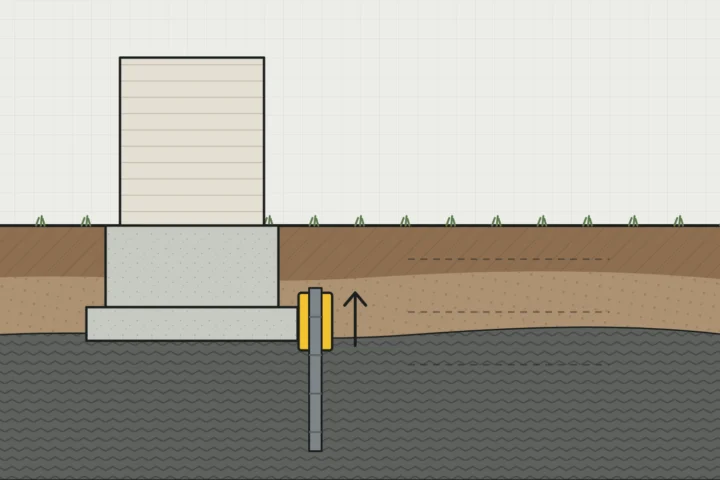
Foundation repair cost per pier is the price a contractor charges to install one support, and the total depends on both that price and how many piers the plan calls for. Per-pier prices vary with the pier type, the depth it must reach, and what else is bundled in, such as excavation, lifting and the warranty. Typical per-pier range: $1,000 to $3,000 per pier for push or helical piers (Modernize, 2026); steel push piers run $1,500 to $3,500 each (Today’s Homeowner, 2026). Estimate, not a quote. Get 3 quotes.
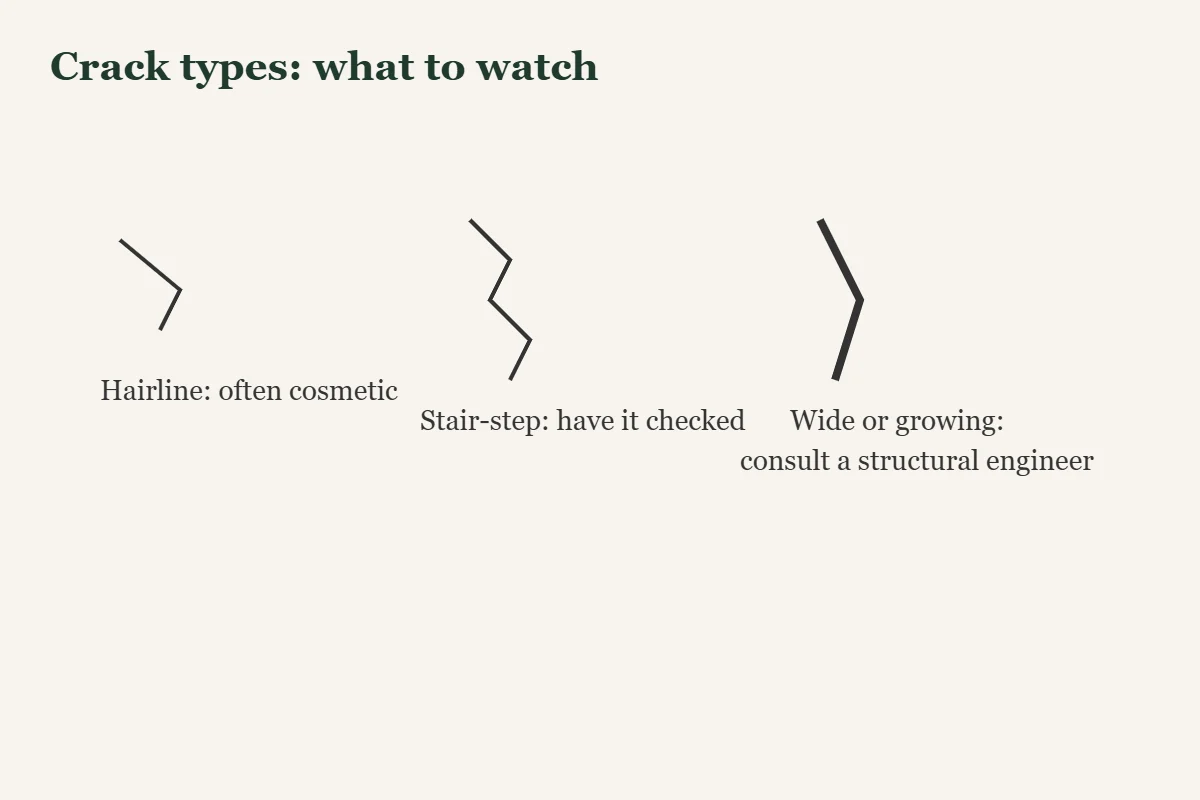
Large, growing, or structural cracks need a licensed structural engineer. A contractor’s inspection is a sales visit, not an engineering assessment.
More cost guides are in Costs and Pricing.
Foundation repair cost per pier: What a per-pier price usually includes
A per-pier price is a bundle. Before comparing numbers, check what each contractor includes:
- Digging the access hole beside or under the foundation
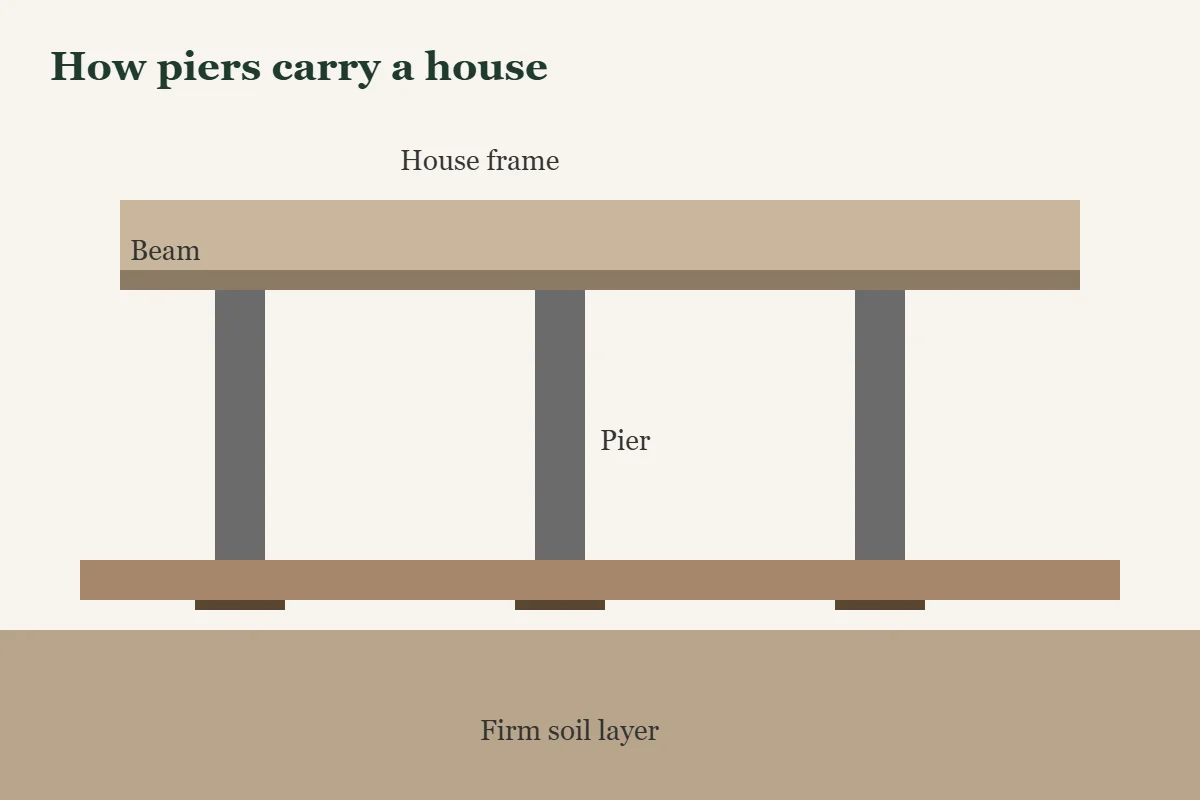
- The pier itself: concrete cylinders, steel push pier sections, or a helical pier
- Installing it to the target depth or load
- The bracket that connects the pier to the foundation
- Lifting or stabilizing the foundation once piers are in
- Backfilling the hole and basic cleanup
- The warranty on that pier
Some contractors also charge separately for mobilization, permits, engineering, breaking and patching concrete, or restoring landscaping. Two quotes with the same per-pier number can have very different totals.
Why per-pier prices differ
Pier type
Pressed concrete piers, steel push piers and helical piers are installed with different equipment and reach different depths. Steel piers driven to a firm layer or to a set load generally cost more per pier than shallow concrete piers. Our guide to foundation repair methods explains how each type works.
Depth
Steel piers are often priced to a base depth, with extra charges if the firm layer is deeper. Ask how deep the price covers and what each additional section costs. Cost per extra section: not in the sources checked; ask the contractor to state it in writing. Estimate, not a quote. Get 3 quotes.
Interior versus exterior piers
Piers installed inside the house, through a slab floor, involve breaking and patching concrete and moving furniture or flooring. They are usually priced higher than exterior piers.
Lift versus stabilize
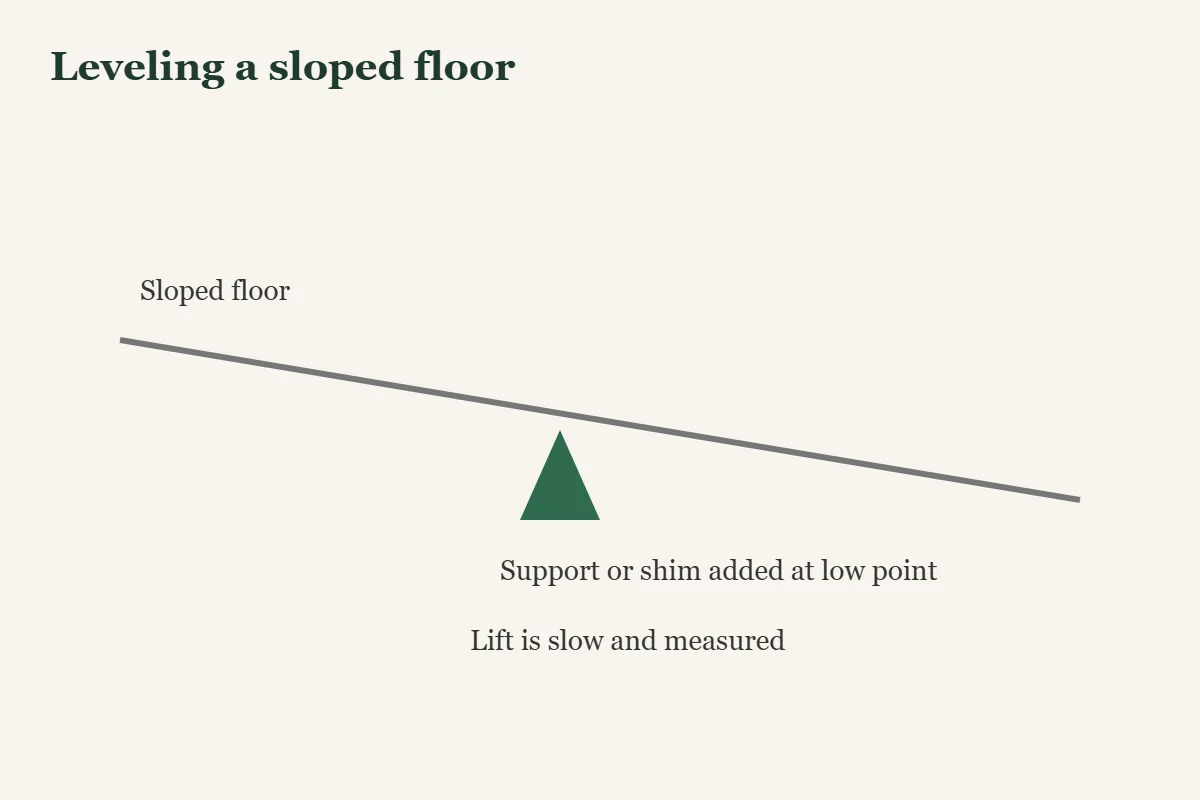
Lifting a foundation back toward level takes more time and care than holding it where it is. See foundation lifting for what lifting involves and its limits.
How the pier count is decided
The number of piers comes from the length of foundation that needs support and the spacing between piers. Spacing depends on the weight of the house, the pier type, and the strength of the foundation beam. A contractor or engineer chooses it; there is no single standard spacing for every home.
That is why pier counts vary between quotes for the same house. One contractor may support only the area that has visibly moved. Another may extend piers further to stop the next section from settling. Neither is automatically right. Ask each one:
- Which walls or beams are you supporting, and why there?
- What spacing are you using, and what is it based on?
- What happens to the unsupported parts of the foundation?
If the answers differ widely, an independent structural engineer can set the pier plan, and every contractor then quotes the same count.
Warranties on piers
Pier warranties differ in length, in what they cover, and in whether they transfer to a new owner. Some cover only the pier itself, meaning re-adjustment if that pier moves, but not new cracks, plumbing damage or settlement in parts of the house without piers. Others are tied to the company staying in business. Read the warranty document itself, not only the sales summary, and keep it with your home records. A transferable warranty and the repair paperwork are often requested when a house is sold.
Comparing pier quotes fairly
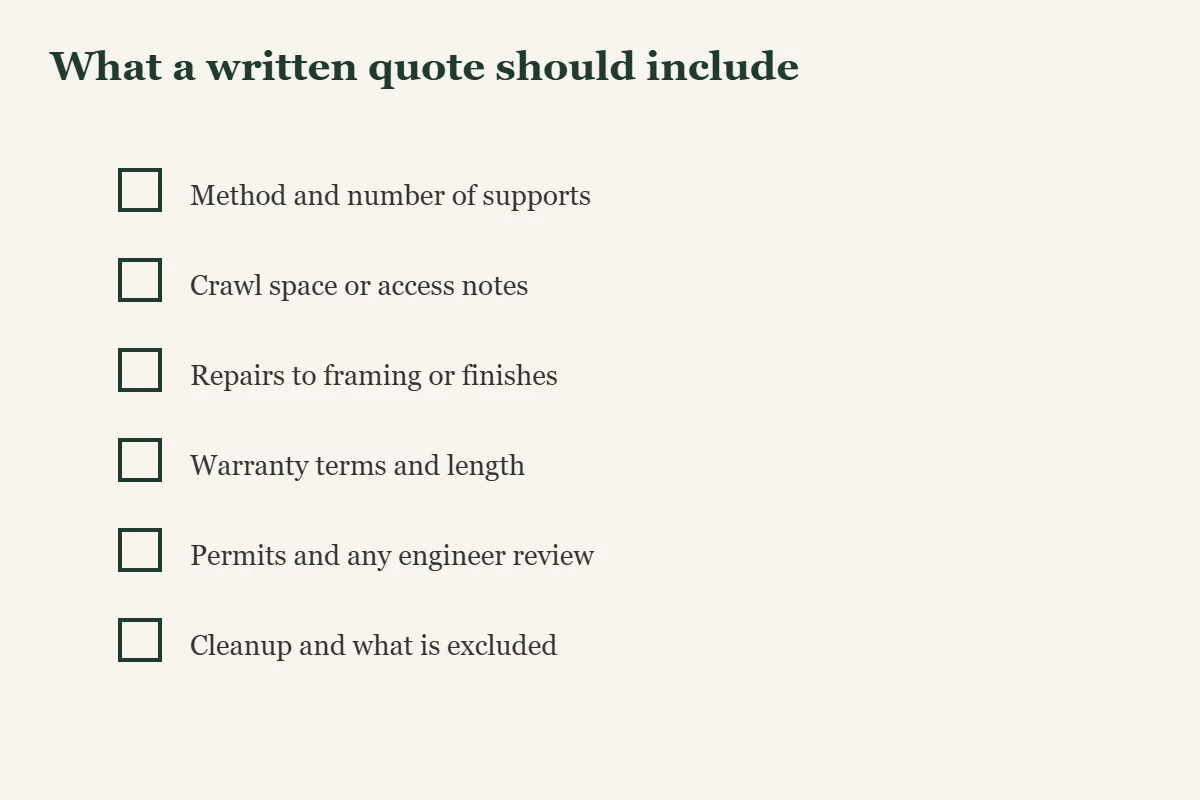
- Put each quote’s pier type, count, spacing and target depth side by side.
- Note what each per-pier price includes and excludes.
- Add separate charges, such as permits, engineering and concrete work, to get a true total.
- Compare warranty length, coverage and transferability.
Estimate, not a quote. Get 3 quotes. For a step-by-step method, see how to compare foundation repair quotes, and for the bigger picture read foundation repair cost.
Frequently asked questions
Is a lower price per pier always the better deal?
Not necessarily. A lower price may cover a shallower pier, a shorter warranty, or fewer included services. Compare the full scope, not just the unit price.
Can a contractor add piers after the job starts?
Some contracts allow it if conditions differ from what was expected. Read how changes are approved and priced before signing.
Who decides how many piers I need?
The contractor proposes a count, but an independent structural engineer can set it instead. When an engineer’s plan exists, every contractor quotes the same number, which makes prices easier to compare.
Do pier and beam homes use the same piers?
Pier and beam homes use piers under interior beams as well as the perimeter. See pier and beam foundation repair cost for how those jobs are priced.
Prices as of November 21, 2026, source: Angi (2025 data); Modernize (2026); HomeAdvisor (2026); HomeGuide (2026); This Old House (2026); Fixr (2026)