On this page
Short answer: Common foundation repair methods include underpinning or piering, jacking, stabilization, sealing, reinforcement, leveling and waterproofing (Bob Vila). The right method depends on the cause, the soil and how far the damage has progressed (Modernize, 2026). Estimate, not a quote.
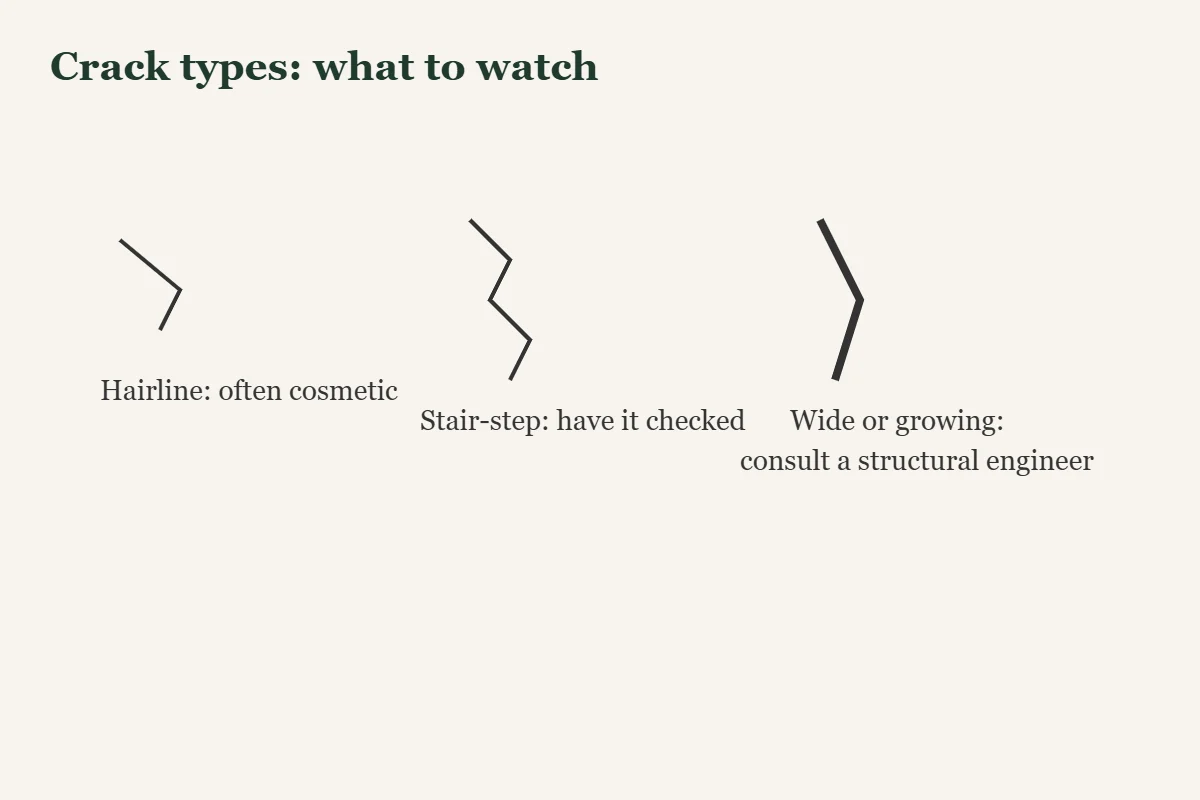
Reviewed by: Hassan Ifthakir, civil engineer (BSc Civil Engineering, COMSATS University, Abbottabad). Last updated: November 2026. This is general information, not expert advice. Large, growing, or structural cracks need a licensed structural engineer.
The main foundation repair methods are deep piers (steel push piers, helical piers and pressed concrete piers), slab jacking with grout or polyurethane foam, shimming for pier and beam homes, and wall bracing or anchors for basements. The right method depends on the foundation type, the soil, how far the house has moved, and what caused the movement. Large, growing, or structural cracks need a licensed structural engineer. A contractor’s inspection is a sales visit, not an engineering assessment.
More guides on piers, leveling and lifting are in Repair Methods.
Foundation repair methods: Piers: supporting the foundation from below
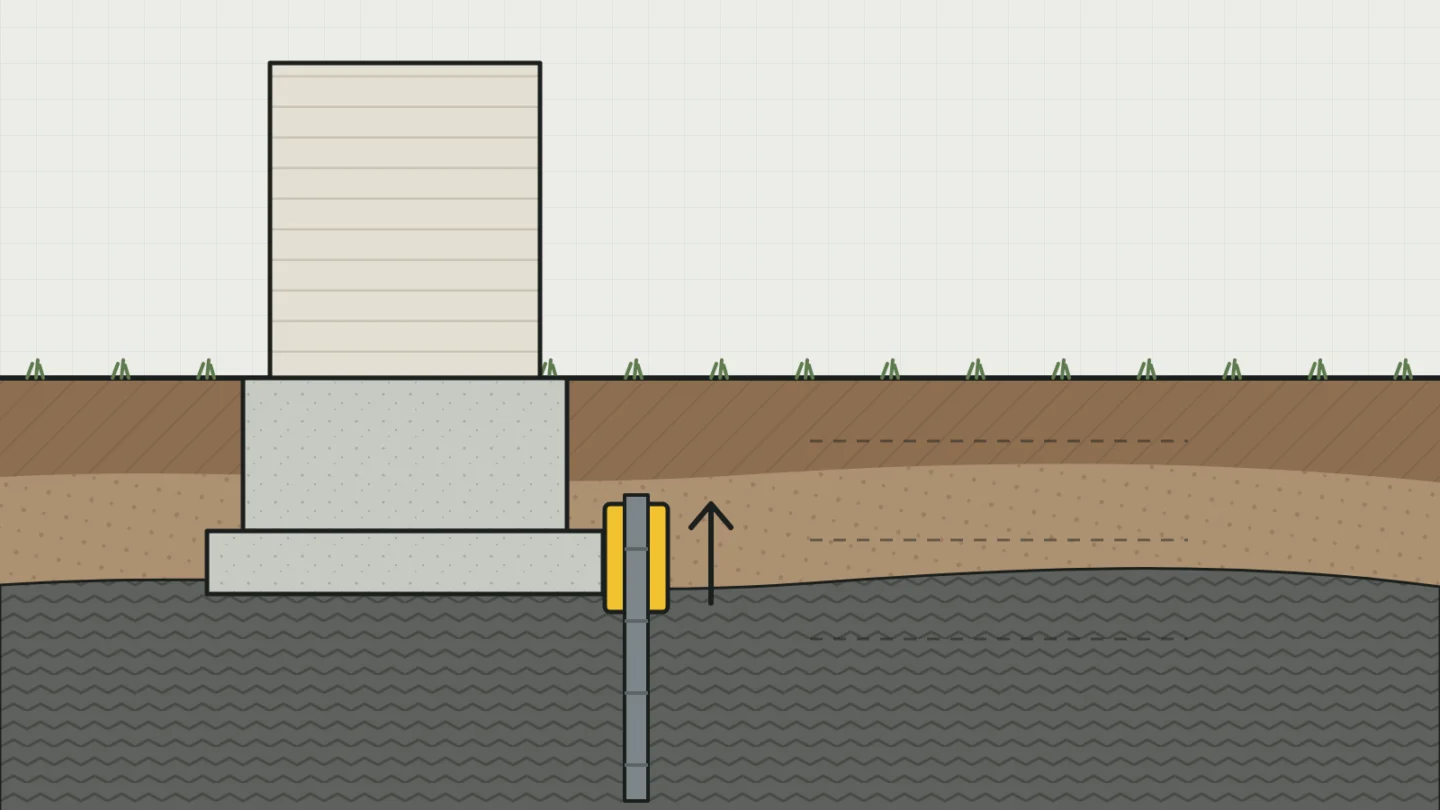
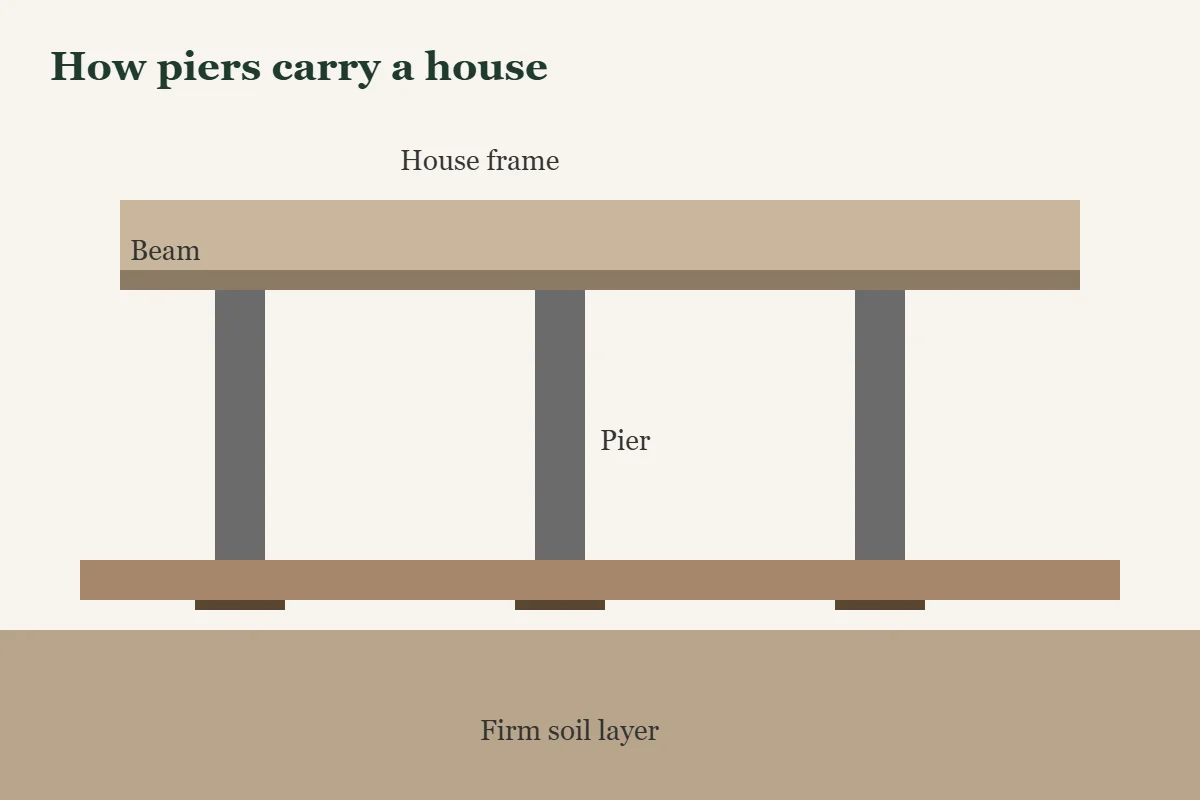
Piers transfer the weight of the house past weak or shifting soil to a firmer layer. They are the most common repair for a settling slab or perimeter beam.
Steel push piers
Steel pipe sections are driven into the ground with hydraulic rams, using the weight of the house as resistance, until they reach a firm layer or a set load. A bracket ties them to the foundation. They can usually go deep and are commonly used where the house is heavy enough to drive them.
Helical piers
Helical piers are steel shafts with screw-like plates that are turned into the soil. Because they do not rely on the weight of the house to install, they suit lighter structures, porches, additions and new construction. Installation torque is used to estimate capacity.
Pressed concrete piers
Short precast concrete cylinders are stacked and pressed into the ground until resistance stops them. They are widely used in some regions. Depth is limited by how far the cylinders can be pressed, so they may not reach a deep firm layer.
Poured or drilled concrete piers
A hole is drilled or dug and filled with reinforced concrete. These are often used under pier and beam homes and in new construction. Curing time is a factor.
Slab jacking and foam injection
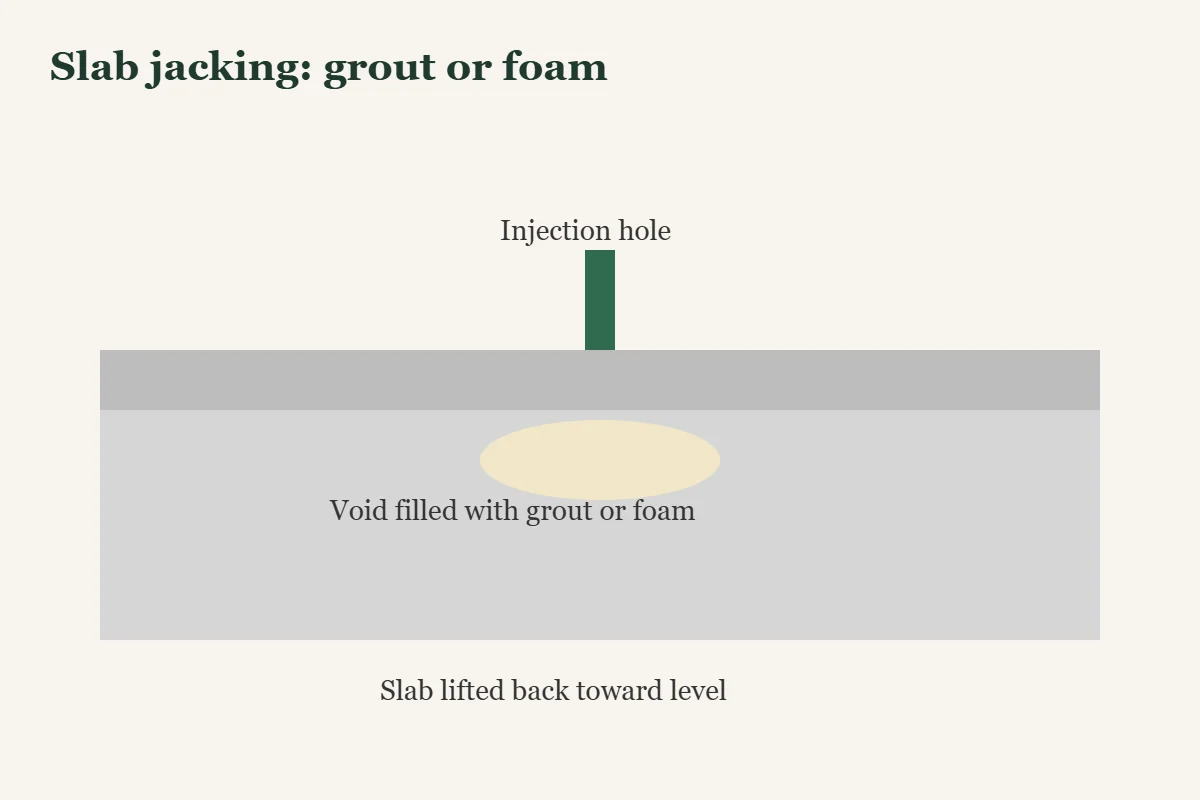
For slabs, sidewalks and some interior floors that have sunk but sit on reasonably stable soil, small holes are drilled and material is pumped underneath to lift and fill voids. Mudjacking uses a cement-based grout. Polyurethane foam injection uses expanding foam through smaller holes. Neither method reaches deeper soil, so neither is a fix when the cause is deep settlement.
Shimming and re-leveling pier and beam homes
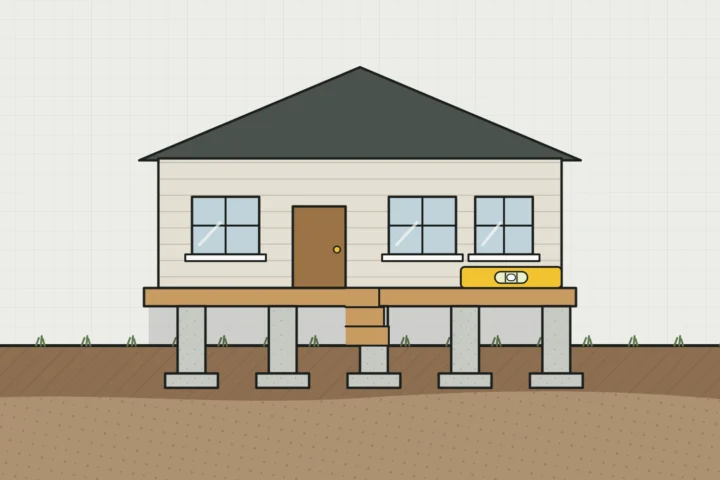
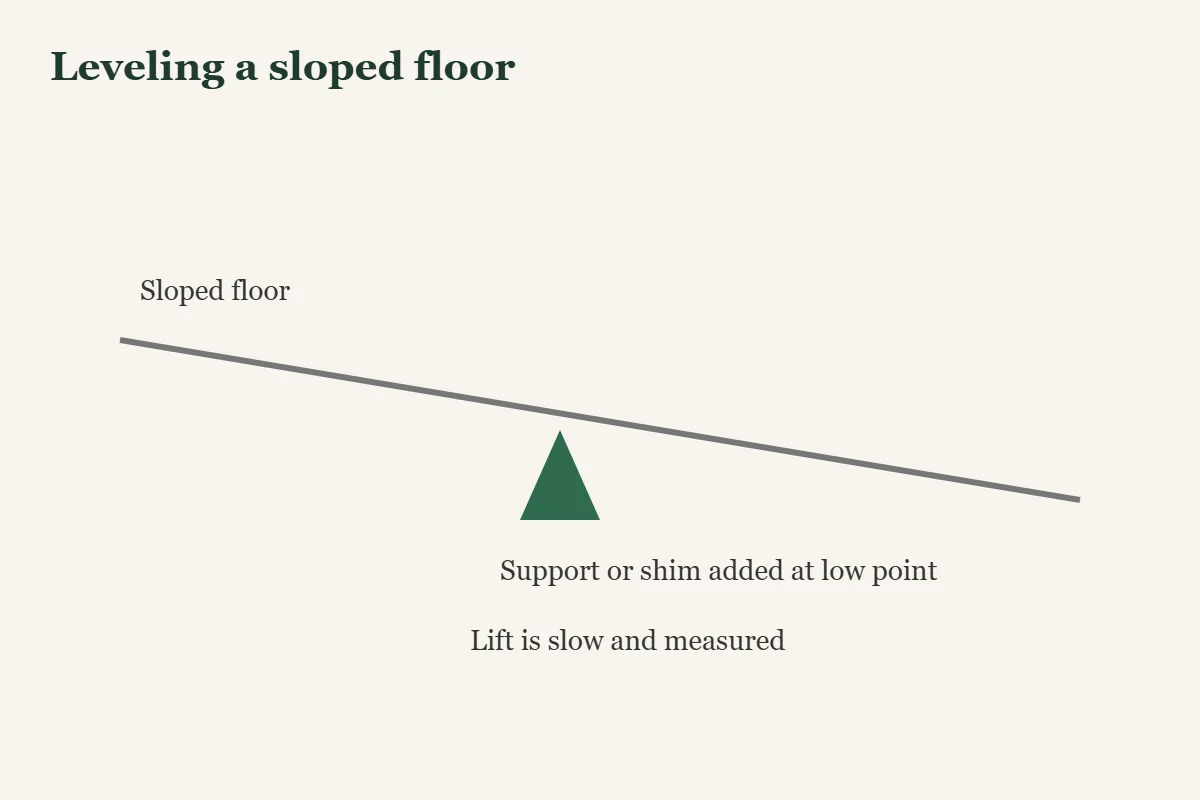
In a raised house, beams that have dropped away from their piers are re-supported with steel or hardwood shims, and new piers are added where needed. See pier and beam foundation repair for how this works and when shims are not enough.
Basement wall repair
Bowing or cracked basement walls are usually caused by soil pressure from outside. Common repairs include steel I-beam braces, carbon fiber straps bonded to the wall, wall anchors set into the yard, and, in severe cases, excavation and rebuilding. Drainage improvements are usually part of the plan.
How methods compare
- Depth reached: steel push and helical piers can generally go deepest; pressed concrete piers and slab jacking are shallower.
- Lifting ability: piers can often lift a foundation back toward level; slab jacking lifts slabs; shims level raised floors.
- Disruption: foam injection and shimming are usually least disruptive; interior piers involve breaking concrete.
- Cost: varies with depth, count and access. $2,200 to $8,100 for most jobs, with an average near $5,200 (HomeAdvisor and Angi, 2026). Estimate, not a quote. Get 3 quotes. See foundation repair cost per pier.
Questions to ask about any proposed method
- Why this method rather than the alternatives for my house?
- What depth or load will each support reach, and how is that confirmed?
- Will the house be lifted, or only stabilized?
- What does the method not fix, such as drainage or plumbing?
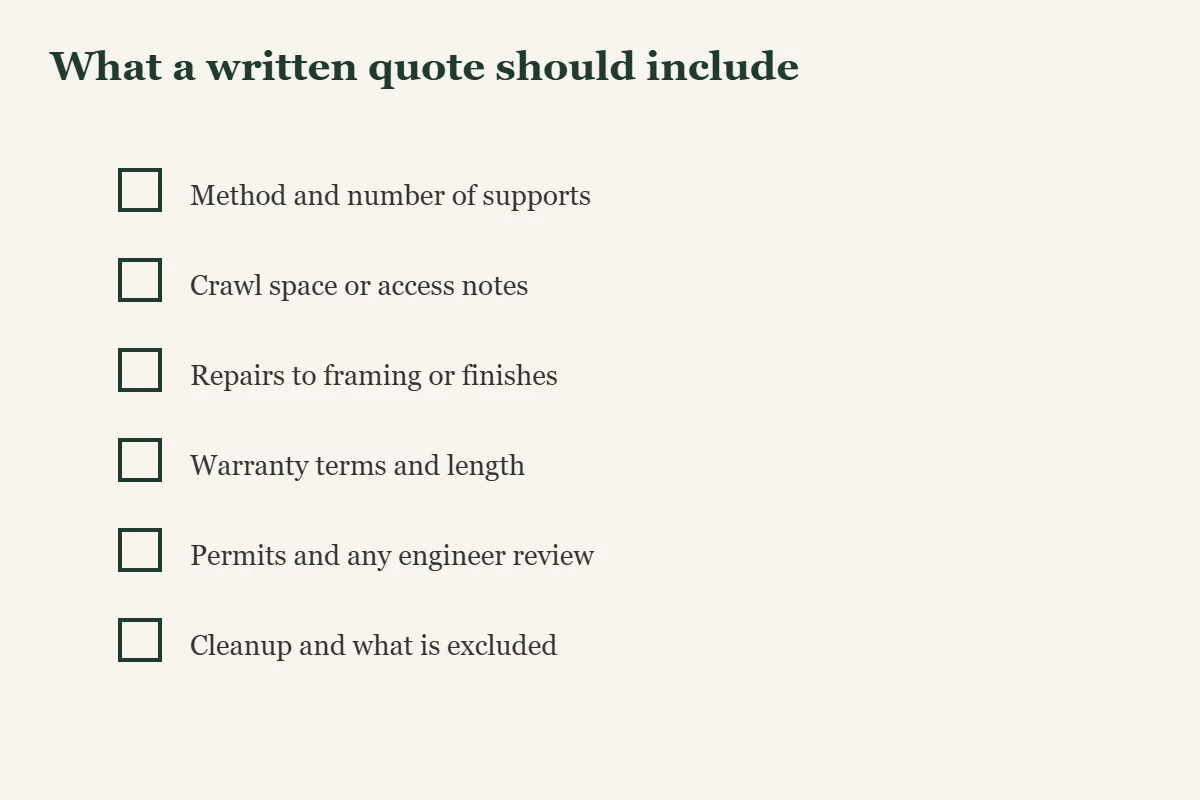
- What does the warranty cover for this method?
Clear answers to these questions are a good sign. Vague answers, or pressure to sign the same day, are reasons to get another opinion.
Choosing a method
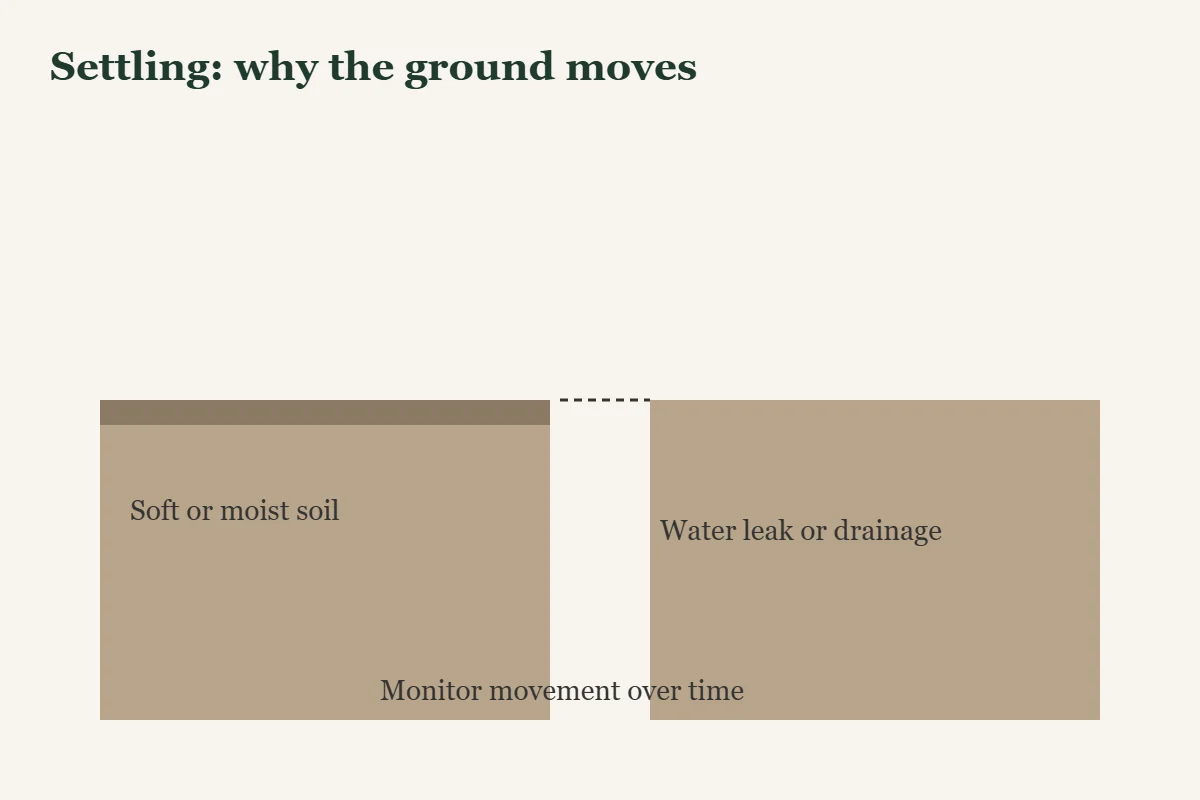
- Find the cause first. Soil type, drainage, plumbing leaks and tree roots each point to different fixes. An inspection should explain the cause.
- Match the method to the soil. Deep, unstable soils call for deeper piers. Shallow voids may need only filling.
- Decide whether to lift or stabilize. Lifting may close gaps and cracks but carries more risk. See foundation lifting.
- Compare like with like. Ask each contractor which method they propose and why. Estimate, not a quote. Get 3 quotes.
Frequently asked questions
Which foundation repair method is best?
There is no single best method. The best one is the method that reaches stable support for your soil and load and addresses the cause of movement.
Can different methods be combined?
Yes. A repair might use exterior piers along one wall, shims in the crawl space, and drainage improvements together.
Do all methods come with warranties?
Most contractors offer warranties, but terms vary widely by method and company. Read what is covered and whether it transfers when you sell.
Prices as of November 21, 2026, source: Angi (2025 data); Modernize (2026); HomeAdvisor (2026); HomeGuide (2026); This Old House (2026); Fixr (2026)