Short answer: Common signs of foundation problems include cracks wider than a quarter-inch, horizontal or zigzag cracks, sticking doors and windows, and gaps between walls and fixtures. Some signs almost always warrant an inspection by a structural engineer (This Old House). Estimate, not a quote.
This guide explains signs of foundation problems. Reviewed by: Hassan Ifthakir, civil engineer (BSc Civil Engineering, COMSATS University, Abbottabad). Last updated: November 2026. This is general information, not expert advice. Large, growing, or structural cracks need a licensed structural engineer.
Foundation problems rarely show up as one dramatic event. They usually appear as a pattern: a door that sticks, a crack that wasn’t there last year, a floor that feels uneven. Looking for that pattern is a sensible first step, but it does not replace a professional inspection.
Signs of foundation problems: Doors and windows that stick or won’t latch
When a door or window that used to work starts to jam, or no longer latches, the frame may have shifted. Movement in the foundation can push on the walls and twist the openings. Check whether the problem is on one side of the house or throughout, because a single sticking door can also come from humidity or a loose hinge.
Cracks in walls, floors and the foundation
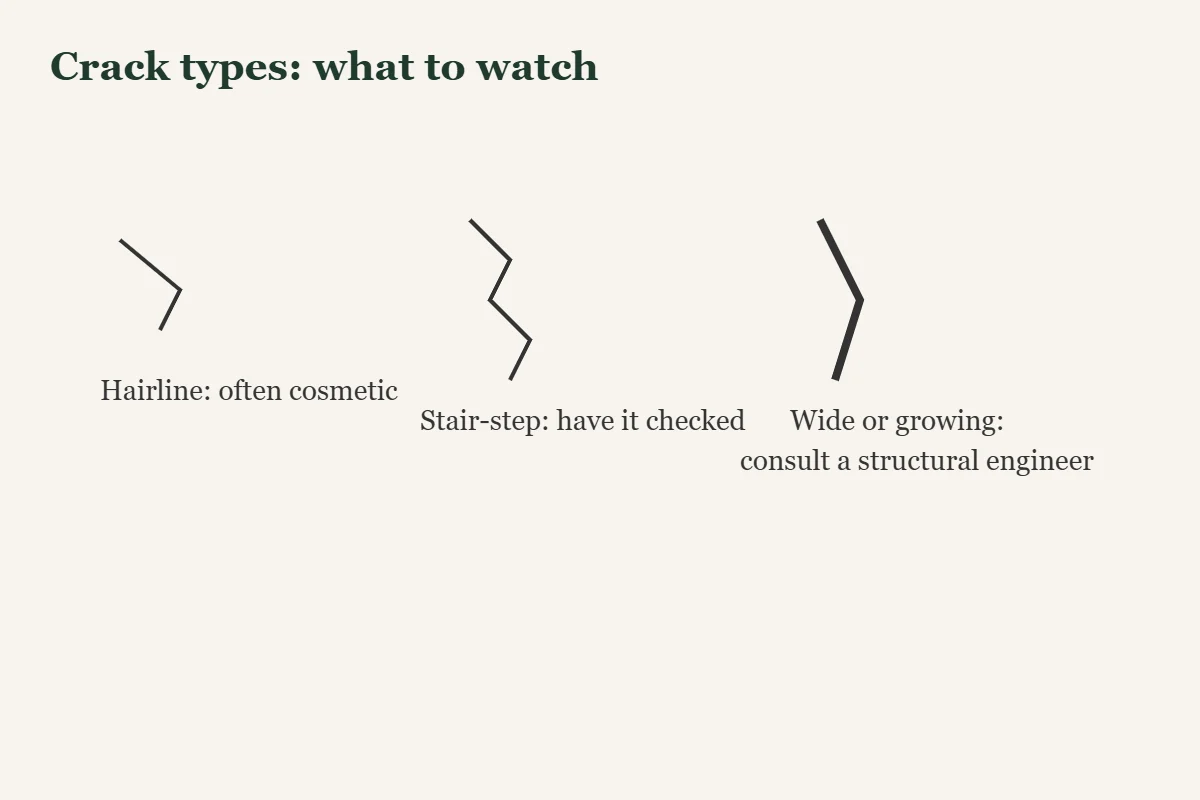
Not every crack is a structural warning. Thin hairline cracks in plaster or drywall are often caused by normal drying or minor settling. Cracks deserve closer attention when they are wider, diagonal, stair-stepped in brick, or growing over time. Horizontal cracks in a basement or foundation wall can point to soil pressure pushing inward, which is a serious concern. Mark each crack with a pencil and the date so you can see whether it changes.
Sloping or bouncy floors
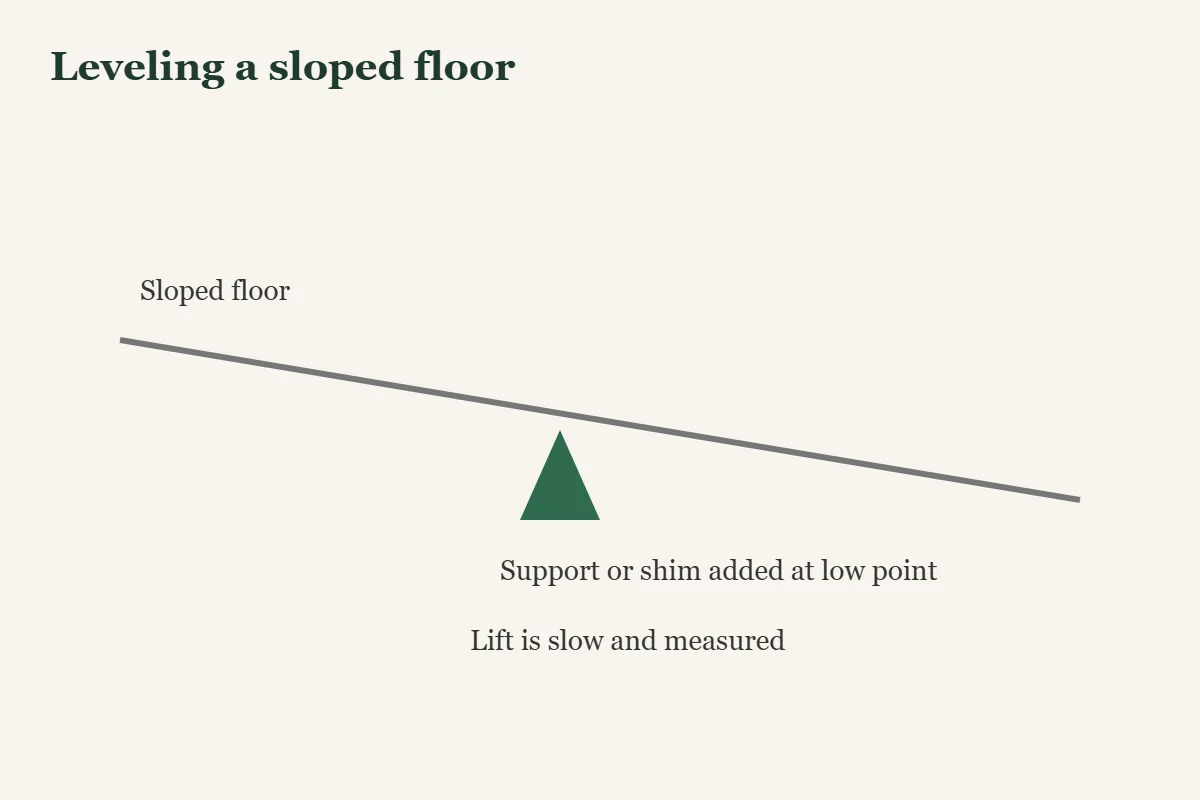
A slight unevenness in an older house is common. A floor that clearly slopes toward one side, or that feels soft or bouncy in particular spots, can indicate that part of the structure has moved. Set a marble or small ball on the floor in several rooms to see where the slope runs. Sudden or widespread sloping deserves a professional look.
Gaps between walls, ceilings and trim
Gaps that open between a wall and the ceiling, or between cabinets and the wall, can show that the structure below is settling unevenly. Small gaps can also come from ordinary movement, so watch whether they widen. Repeated nail pops in drywall are another sign that framing may be shifting.
Damp crawl spaces, basements and exterior signs
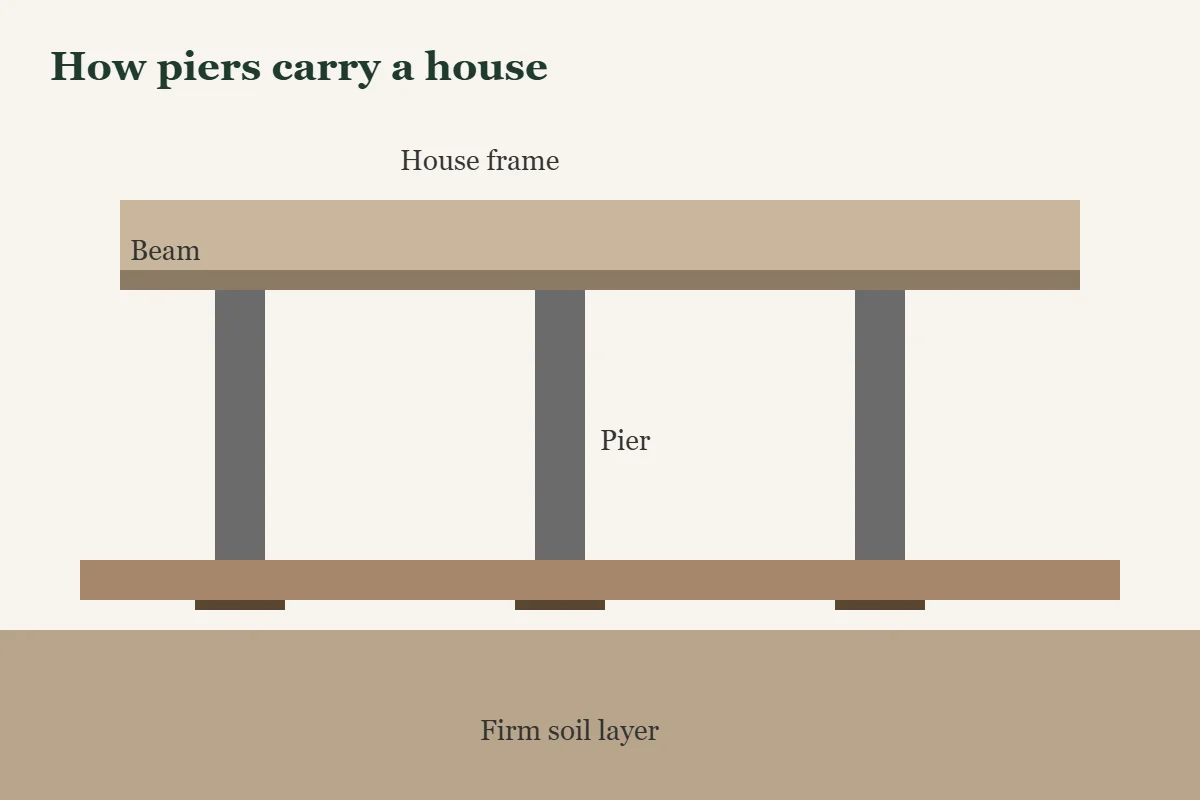
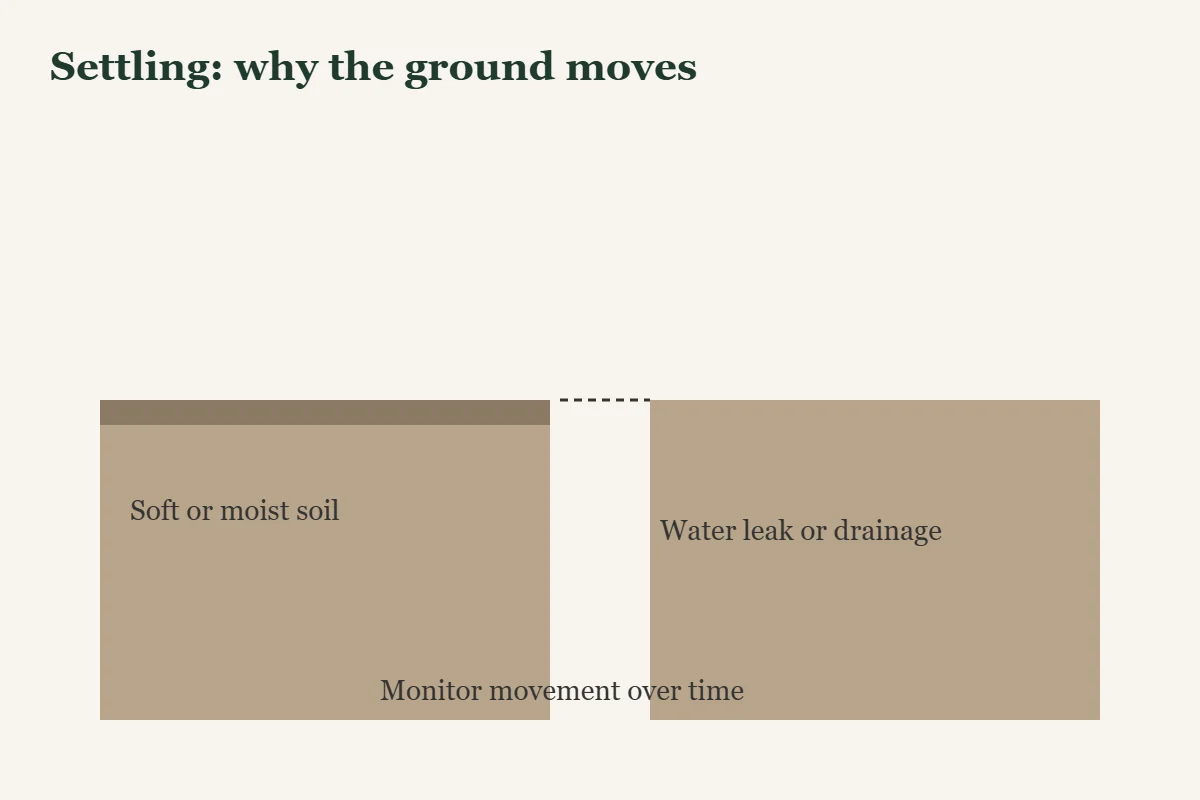
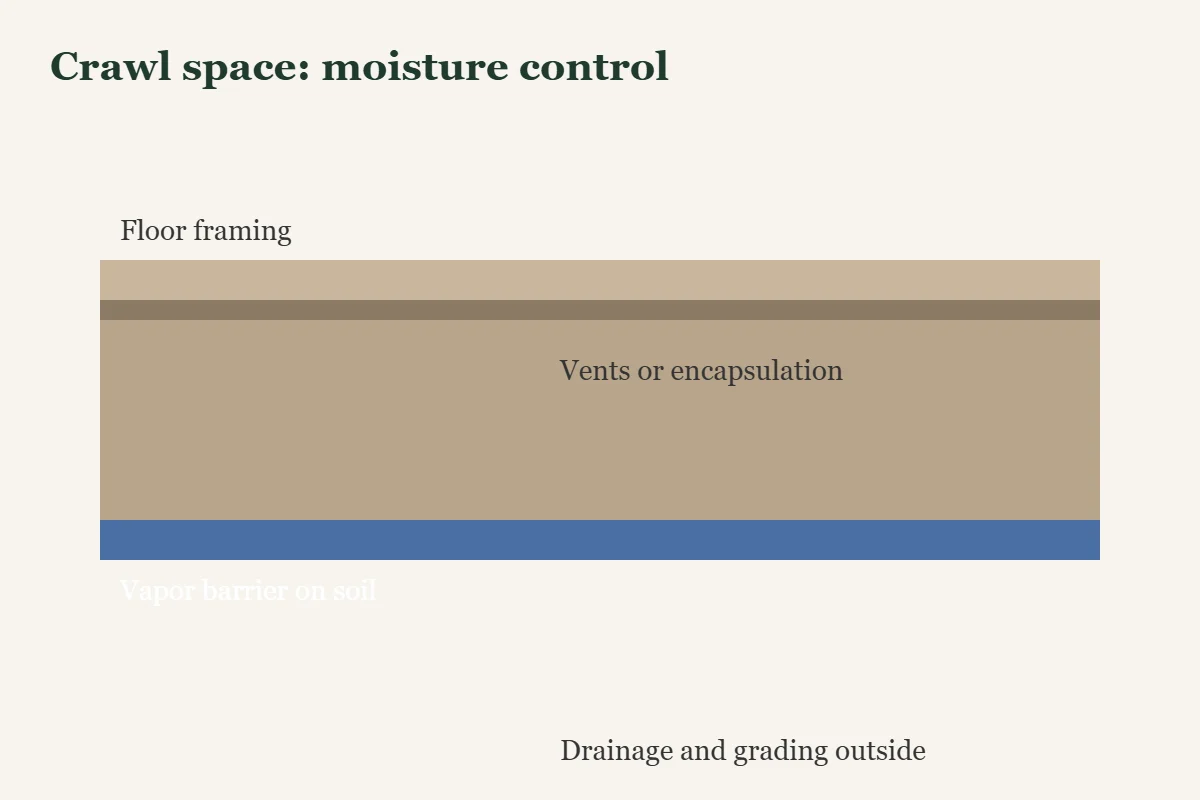
Water near the foundation, a persistently damp crawl space, bowing walls, or a chimney or porch pulling away from the house can all point to foundation stress. Check the outside too: pooling water, leaning walls, and cracks in the exterior foundation wall are worth noting.
Settling or a real problem?
Settling is common, and many homes move a little over their lives. What matters is whether the movement is active. A structural engineer can tell whether a crack or slope is historic and stable, or still changing. If the signs are getting worse, appear in several places at once, or affect the structure, arrange an inspection rather than waiting.
What to do next
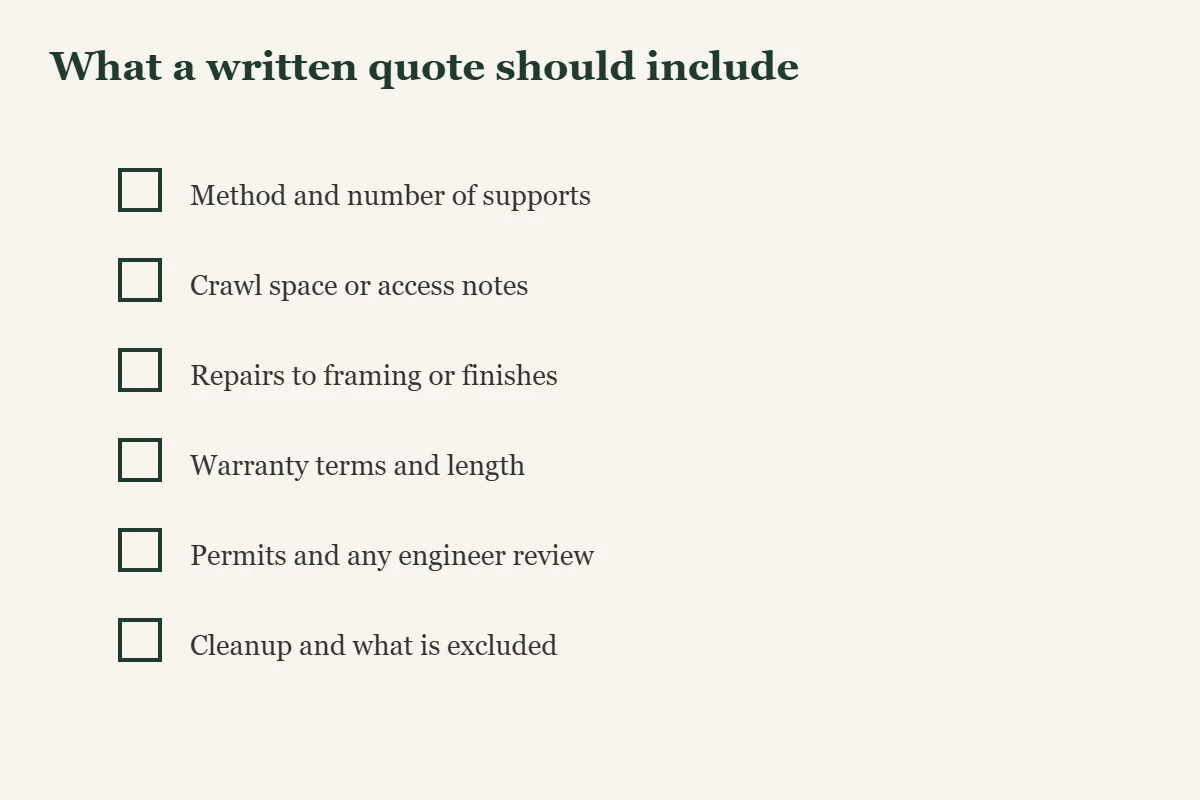
Write down what you see, when you first noticed it, and whether it has changed. Take photos with a ruler or coin in frame for scale. Then arrange an inspection by a licensed structural engineer or an experienced foundation professional. Ask for a written report, and compare any repair quotes against it. Our foundation repair inspection guide explains what to expect, and the foundation repair cost guide explains how quotes are built.
Monitor small cracks, but do not wait on large ones
Smaller cracks should be watched for changes. If a crack grows larger or quickly, it may point to a foundation problem (Redfin). Mark each crack with a date and photograph it so you can see whether it changes.
Signs that need a structural engineer
Cracks wider than a quarter-inch, horizontal cracks, and zigzag patterns need professional attention (Angi). Bowing walls and a sloping floor are also signs that call for an engineer’s review (This Old House).
Frequently asked questions
Are all foundation cracks dangerous?
No. Hairline cracks are often cosmetic, but cracks that are wide, growing, horizontal or zigzag need a professional look.
How often should I check my foundation?
Angi suggests inspecting the foundation about every six months from the outside and inside, if possible.
Do sticking doors always mean a foundation problem?
Not always. Doors can stick for other reasons, but when several signs appear together, get an inspection.
Prices as of November 21, 2026, source: Angi (2025 data); Modernize (2026); HomeAdvisor (2026); HomeGuide (2026); This Old House (2026); Fixr (2026)