On this page
Short answer: Pier and beam foundation repair averages about $10,000 in Angi’s 2025 data, with most homeowners paying between $6,000 and $14,000. Modernize’s 2026 figures put most jobs at $3,000 to $9,500. Estimate, not a quote. Get 3 quotes.
Reviewed by: Hassan Ifthakir, civil engineer (BSc Civil Engineering, COMSATS University, Abbottabad). Last updated: November 2026. This is general information, not expert advice. Large, growing, or structural cracks need a licensed structural engineer.
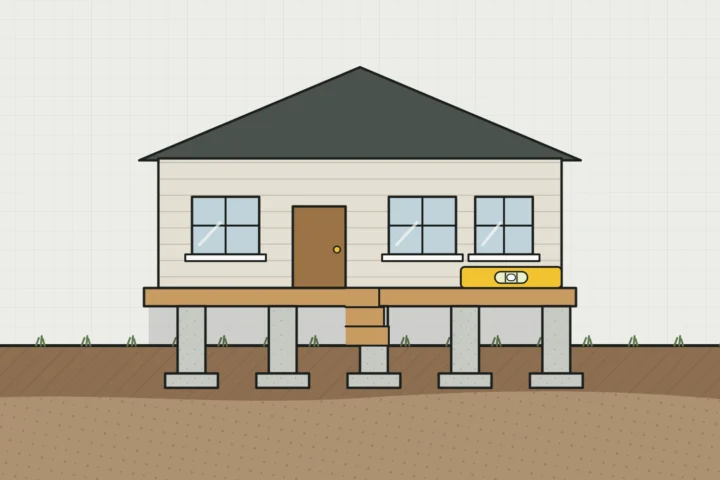
Pier and beam foundation repair cost depends on which parts need work: re-shimming existing piers is the smallest job, while adding piers, replacing rotted beams or joists, and fixing a wet crawl space add labor and materials. Crawl space height and access also matter, because almost all of the work happens underneath the house. Typical range: $1,000 to $10,000 for most jobs, with a typical job at $2,500 to $8,000 (FoundationCosts, 2026). Estimate, not a quote. Get 3 quotes.
Large, growing, or structural cracks need a licensed structural engineer. A contractor’s inspection is a sales visit, not an engineering assessment.
For how the repairs themselves work, read pier and beam foundation repair first. More cost guides are in Costs and Pricing.
Pier and beam foundation repair cost: What you are paying for
A pier and beam repair quote usually combines several kinds of work. Knowing which ones are in your quote explains most of the difference between prices.
Re-shimming
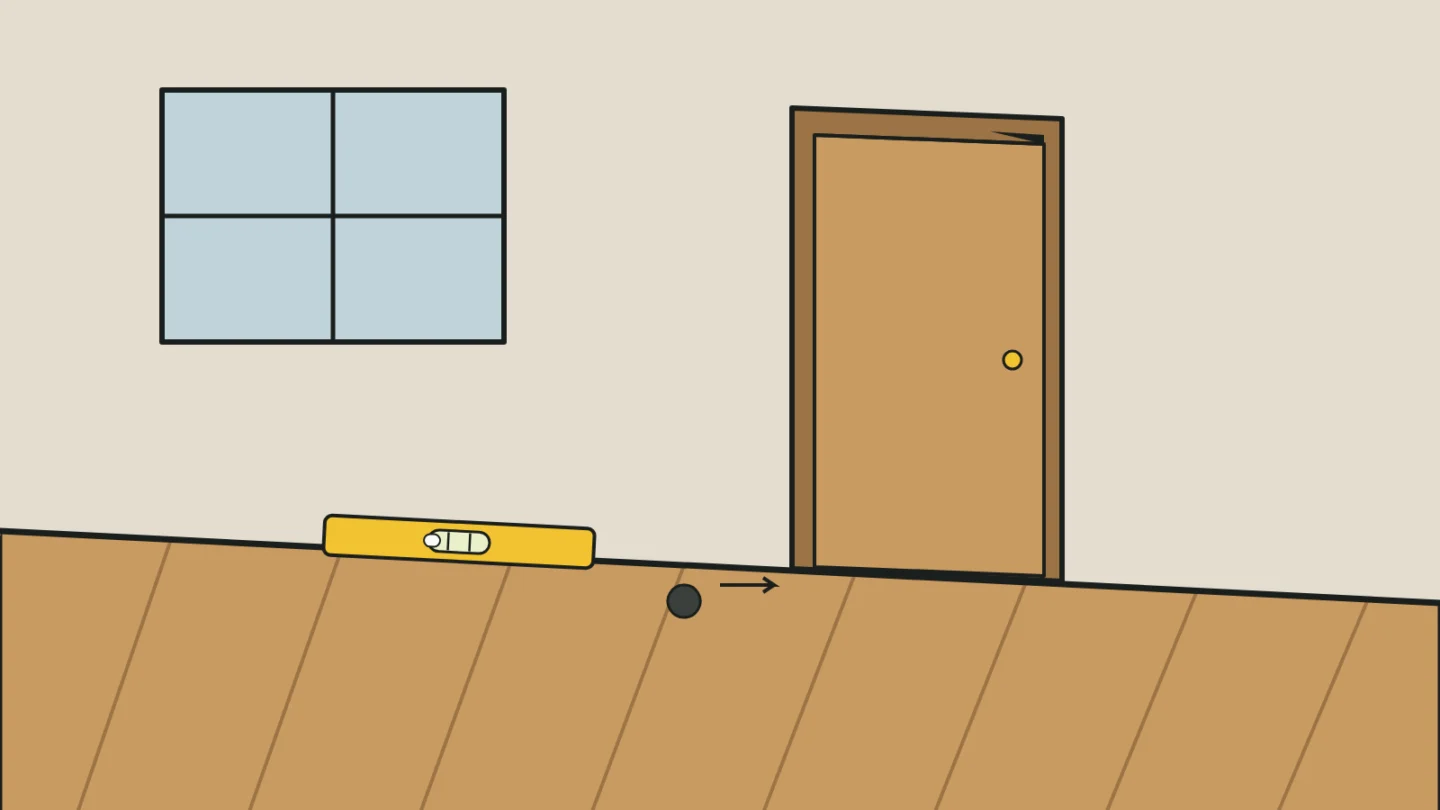
When the piers are sound but beams have dropped, the gaps are filled with new shims and the floor is brought back toward level. This is usually the least expensive kind of pier and beam work. Ask what the shims are made of, since steel and treated hardwood behave differently over time. Estimate, not a quote. Get 3 quotes.
New or replacement piers
Cracked, leaning or sinking piers are replaced, and extra piers are added where beams span too far. The pier type matters: a poured concrete pad and block pier, a pressed concrete pier, and a steel pier driven to a deeper layer are all priced differently. Estimate, not a quote. Get 3 quotes. See foundation repair cost per pier for how pier counts are set.
Beam, sill and joist replacement
Rotted or termite-damaged wood is cut out and replaced, or strengthened by sistering new lumber to it. The amount of damaged wood is often unknown until work starts, so ask how the quote handles extra damage found later. Estimate, not a quote. Get 3 quotes.
Moisture and drainage work
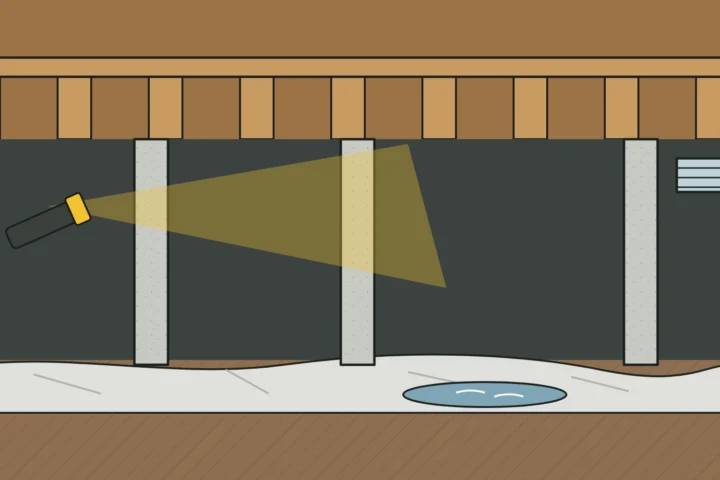
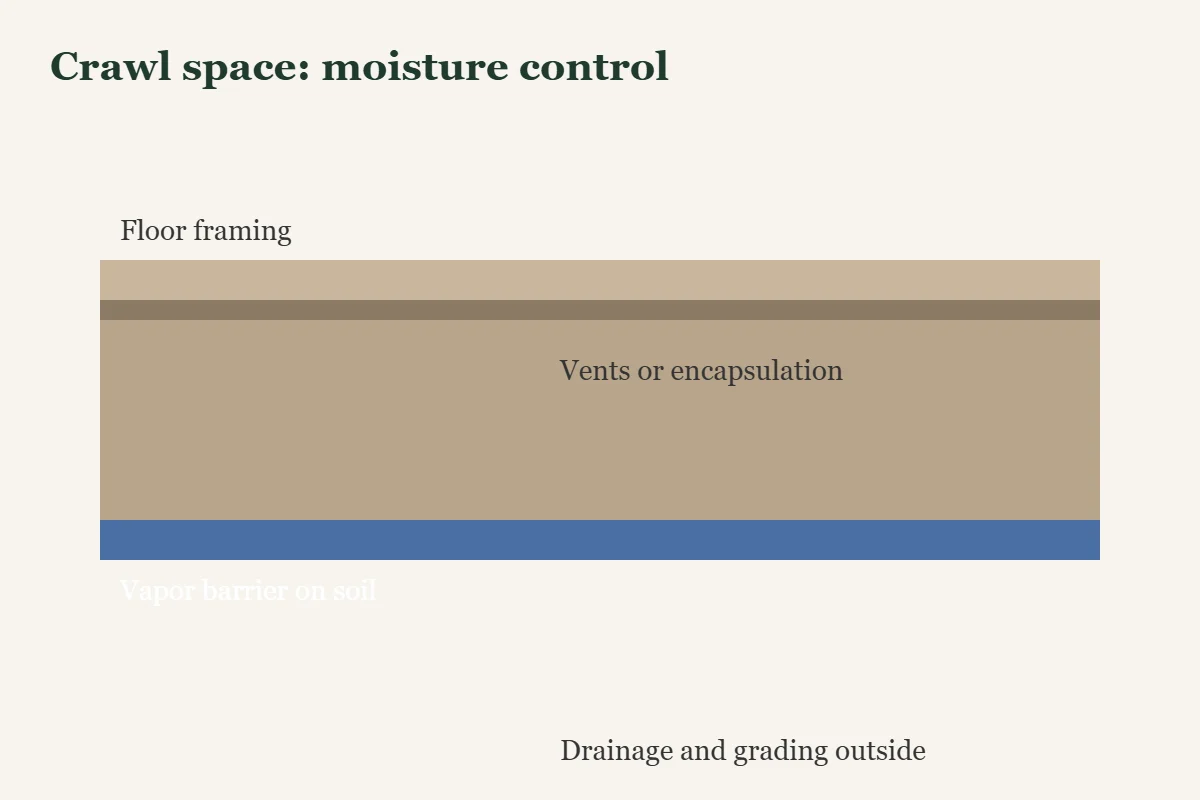
Vapor barriers, crawl space vents or encapsulation, gutters, downspout extensions and grading changes may be part of the quote or quoted separately. Skipping them can shorten the life of the repair. Our pier and beam crawl space guide explains the options. Estimate, not a quote. Get 3 quotes.
Factors that raise or lower the price
- Crawl space height. A low crawl space slows every task and may require digging out working room.
- Number of affected areas. One sagging beam is a different job from a house that has settled in several places.
- Wood condition. Rot and insect damage are the most common reason a quote grows after work begins.
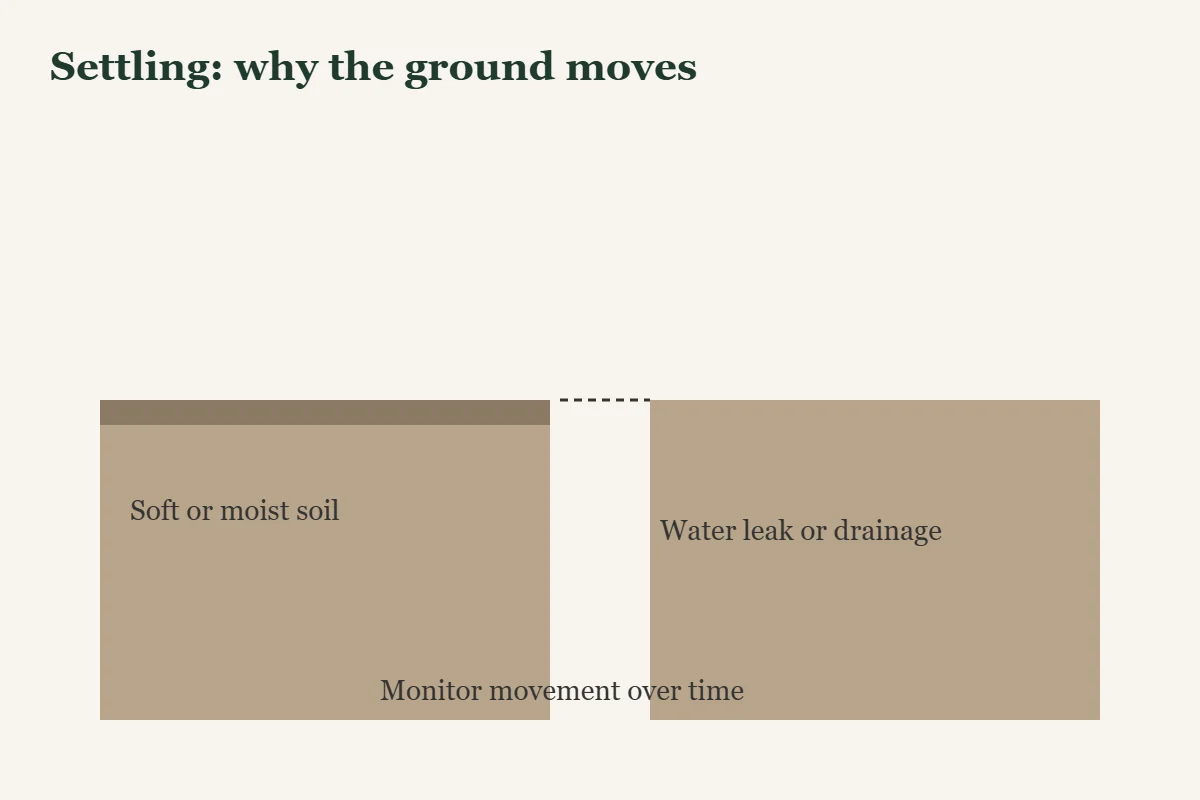
- Soil. Expansive clay and poorly compacted fill can call for deeper or more piers.
- Plumbing. Re-leveling can stress old drain lines. Some quotes include a plumbing test; most do not.
- Permits and engineering. Structural permits and an engineer’s letter add cost but protect you, especially when you sell.
- Warranty. A longer, transferable warranty is usually priced into the job.
Questions to ask about any pier and beam quote
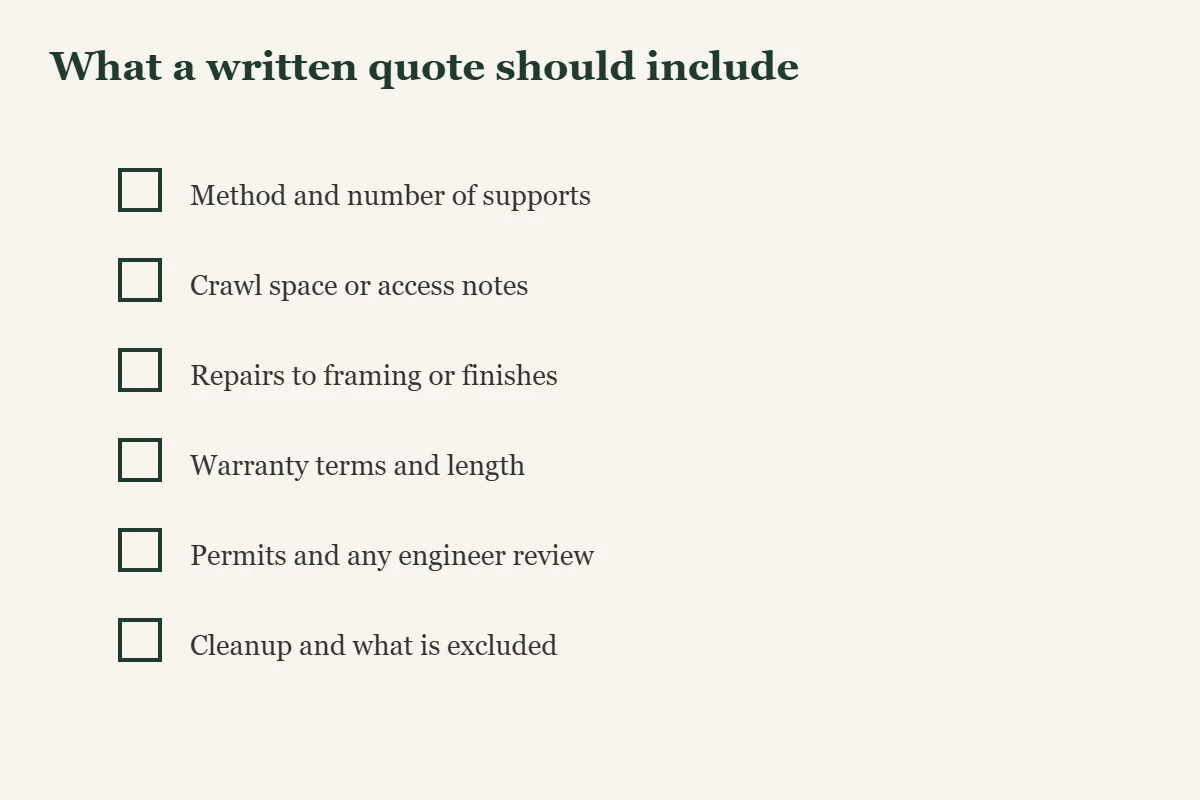
- Which piers, beams and joists will be repaired, and where are they on a drawing?
- What type of pier will be used, and how deep will it go?
- How will extra rot or damage found during work be priced?
- Is moisture or drainage work included, or quoted separately?
- Who pulls the permit, and is an engineer’s letter included?
- What does the warranty cover, for how long, and does it transfer?
Estimate, not a quote. Get 3 quotes. Lining up three written quotes for the same scope is the clearest way to judge a price. See how to compare foundation repair quotes.
Frequently asked questions
Is pier and beam repair usually cheaper than slab repair?
It often can be, because the work is reachable from the crawl space without breaking concrete. But extensive wood replacement or a very low crawl space can make it a large job. Compare written quotes rather than assuming.
Why did my quote go up after work started?
Hidden rot or termite damage is the usual reason. A good quote explains in advance how extra damage is priced, so there are no surprises.
Do I need a permit for pier and beam repair?
Many cities require a permit for structural foundation work, including pier replacement. Rules vary, so ask your local building department or have the contractor confirm in writing who pulls the permit.
Should I fix the crawl space moisture at the same time?
If moisture caused the damage, fixing it at the same time protects the repair. Ask each contractor what they think caused the problem and how their quote addresses it.
Prices as of November 21, 2026, source: Angi (2025 data); Modernize (2026); HomeAdvisor (2026); HomeGuide (2026); This Old House (2026); Fixr (2026)